MMP elections require a better Head of State

Change to a New Zealand Head of State is less about our cultural identity and far more about enhancing New Zealand’s democratic stability and transparency. It is a change that deserves cross-party support because it is a change the makes us a better democracy. A more inclusive society.

The transition process we have developed to achieve this important goal recognises the importance of Te Tiriti. It acknowledges diversity and contemporary New Zealand culture. It strengthens the constitutional and political stability New Zealanders have created over the decades.

Transitioning the role of Governor-General to be NZ’s head of state is a pragmatic, sensible and necessary improvement. It is already in practice what the role is for. It makes sense for all New Zealanders to know that. To be honest with ourselves about how political power is achieved and how it gets taken away.

The Head of State campaign has developed a straight-forward, three step process and it starts with all seven political parties being included in discussions about who the next Governor-General should be.

Step One is that role of Governor-General should be appointed by cross-party consensus, or by a super-majority in the house, because that is what New Zealanders are looking for. More cross party agreement on the fundamental needs and challenges. Whether constitutionally, socially, economically and politically.

Our electoral system makes the change all the more necessary and the result of this year’s election is another example of how MMP works. Caretaker governments, coalition negotiations, and potentially longer transitions between governments.

It was a known aspect of MMP when New Zealanders voted for it. Both in 1993 and again in 2011. That is why our campaign for a New Zealander as Head of State was started the year after MMP was introduced. To keep the improvements to our democracy going. To build the consensus needed to have achieve a New Zealander as Head of State and transition from parliamentary republic to parliamentary republic.

New Zealand needs change because we are more diverse than ever before but the most important reason to do it is that it improve our democracy. Having a New Zealander as Head of State would clarify and simplify how our government works. It will increase transparency and democracy. It will improve neutrality and create a more independent constitutional office. It will be more inclusive and open . More reflective of who we are as a nation.

It will remove the confusing notion of ‘the crown’ and focus instead on parliament and executive government existing because voters have decided it should. It will help all New Zealanders appreciate the value of Te Tiriti.

Let’s give ourselves some credit as a nation for being one of the world’s most stable democracies. Let’s acknowledge that we have achieved that fact because we are not afraid to face up to the challenges of living together as a nation. We chose MMP because the old ways were no longer working. We can also improve MMP and our parliamentary political system by improving the way we select and define the role of New Zealand’s Head of State.

Election shows need for clear constitutional leadership

If New Zealand had a better defined head of state the period between election day and the appointment of the next government would be more transparent and stable. A party-neutral Head of State would provide constitutional leadership and clear direction about what happens next.

It has been a week since election night and the Governor-General has made no statement or issued any information about her role in the formation of the next government. She has carried on with ceremonial duties, marking Armistice Day at the Pukeahu War Memorial, but Government House has not issue a statement about what her powers and duties are, or what is expected of incoming Members of Parliament.

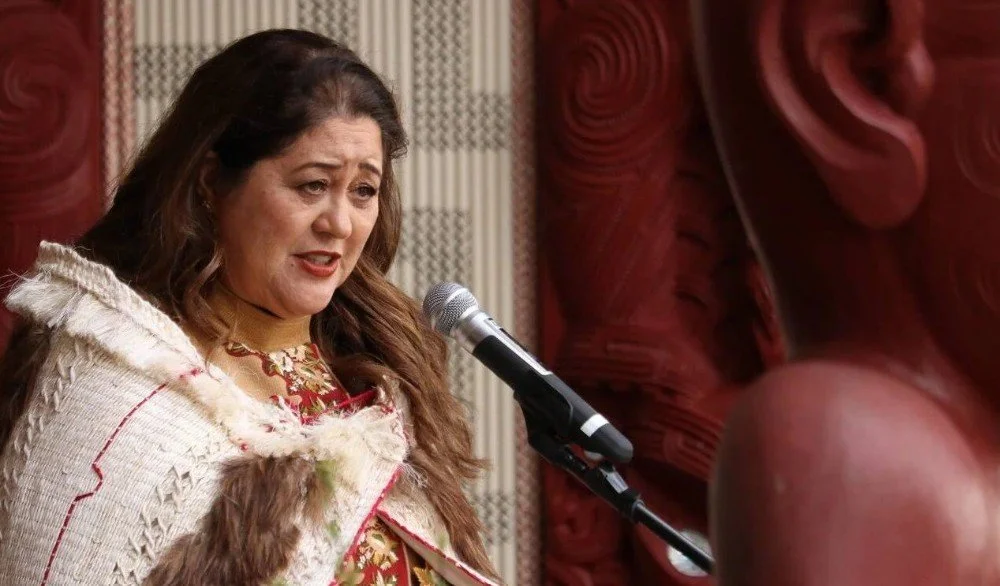
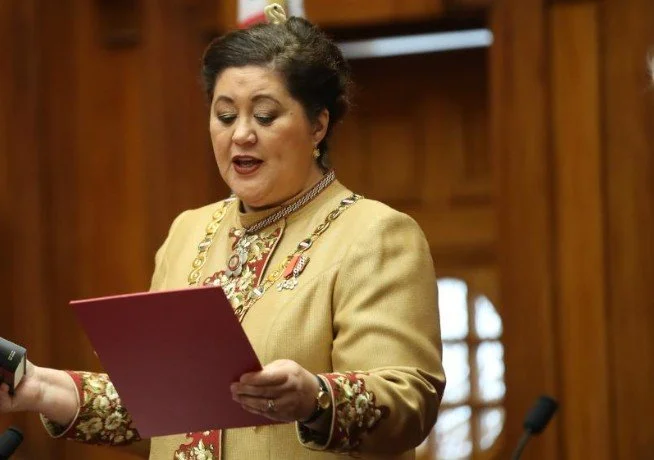
Right now Dame Cindy Kiro is an office holder ‘caught between conventions’. Caught between remaining neutral by letting members of parliament negotiate the formation of executive government and being the country’s constitutional leader. The only person who will officially appoint the next Prime Minister and every other Minister of the Crown.

As Governor-General the conventions are clear enough. Let the election results be finalised. Wait for coalition talks to conclude. Appoint as PM the party leader who can demonstrate they have the confidence of the majority of members of parliament.

Except this election is different. It is close and there is a new, untested party in the mix. As a result the role of Head of State needs to evolve. It is in this post-election, pre-results period, when opinions, party positioning and conjecture are at their peak, that the role of constitutional leader needs to be more active.

The role must remain above the fray and not be seen to influence in any way what voters have delivered. As the PM announced on election night the care-taker government conventions are in place. But as the only senior leader whose role and relationship to government is not in question, the Governor-General as New Zealand’s de facto Head of State should issue a succinct and firm public statement. To ensure there is no misunderstand either here or overseas about what is happening and what needs to happen.

Like previous elections we are waiting for final results to be declared before coalition talks can be finalised but unlike previous elections we are not sure which parties will be in those talks. That is the difference. The overhang is a complicating factor but it is not actually the cause of the delay. Any election can deliver a close election or a hung parliament, regardless of whether the voting creates an overhang.

A clear statement and setting of expectations would mean that regardless of what any party leader, politician, political commentator or member of the public predicted or claimed, voters would have an authoritative and reassuring statement from our highest constitutional office setting out what will happen next and is expected of all those involved.

Over time the role of Governor-General has adapted to better suit New Zealand’s democratic needs and it is at times like this when the importance of the role’s constitutional duties becomes very apparent. New Zealand has an out-dated symbolic Head of State on the other side of the world. We have a need to better define what a Head of State is for and what its role is at election time.

Our campaign is proposing a straight-forward solution to having the British King as Head of State. Taking office of Governor-General and transitioning it into being New Zealand’s actual Head of State. Set out clearly what the office is for by ensuring the duties and powers are well-defined in law and better guided by convention. There is no convention preventing the Governor-General from issuing a statement between Writ day and the return of results. So now is the time to be a constitutional leader. To establish that new convention and better serve the needs of all New Zealanders.

.

The role of our Head of State at election time

Looking at the important role the Governor-General plays in New Zealand’s elections shows how straight-forward it will be to make the position New Zealand’s actual Head of State.

The Governor-General has a pivotal constitutional and ceremonial role at election time. Carried out in a way that maintains the civility, stability and continuity of parliament and our democracy.

Having our a Head of State based on the role of Governor-General will clarify and adjust those processes and enhance their legitimacy. It will better honour our heritage and traditions. It will preserve the decorum and stability of the hand-over of power.

Three important events will happen throughout this election period and all involve the Governor-General acting as Head of State. On 1 October there will be the official proclamation by the Governor-General to dissolve Parliament. Then 4 October is Writ Day when the Governor-General signs and issues the formal written direction (the writ) instructing the Electoral Commission to conduct the general election. Then at some point in the weeks after 7 November when the coalition talks are complete we will see the Governor-General officially appoint the Prime Minister and cabinet ministers on behalf of voters.

In our constitutional system, the Governor-General carries out all of the functions of Head of State under the direction of Ministers. This ensures the Head of State is doing what the Government and therefore the majority of voters that elected them want. There are certain discretionary powers (the reserve powers) they hold and while all three of the actions undertaken by the Governor-General during this election can be seen as an example of the reserve powers being used, in practice the Governor-General - acting as almost but not quite Head of State - is acting under the direction of either Parliament or Voters.

It was Cabinet who chose the date of the election and with it, the date of the dissolution and Writ Day. So the Governor-General’s role is to officially sanction the beginning of that process. When the election results are in and coalition talks concluded then the Governor-General will appoint as Prime Minister the Party Leader who can show they have the confidence of the majority of parliament. Thereby making official what voters have decided.

Today, 1st October the Governor-General’s proclamation dissolving our 54th parliament will be read on the steps of Parliament. Officiating at the ceremony will be the Clerk of the House of Representatives. The actual proclamation will be read out by the ‘Herald at Arms Extraordinary to the King’. Radio New Zealand has produced an easy to read Field Guide to the Dissolution of Parliament that we recommend.

The ceremony has changed over the years to become almost entirely our own. As Louis Collins at Radio NZ writes “the ceremony has become distinctly Aotearoa, integrating te ao Māori into proceedings”.

The simplest way to extract ourselves from the out-dated and unnecessary symbolism of having the British Monarch pretending to be New Zealand’s Head of State is to accept the reality of what we now do and just adjust accordingly. We will no longer need any Herald at Arms Extraordinary to the King.

For the last 60 years the role has been carried out by successive Governor-Generals. To make the role our Head of State we propose that the next Governor-General is selected by a super majority in Parliament. Then after all of the details of the change to Head of State have been clarified New Zealanders can vote in a referendum and have the final decision.

One day, it could be our first actual New Zealand Head of State who will stand on the steps of Parliament and read the Proclamation dissolving Parliament. Then a New Zealander as Head of State that issues the writ for an election.

Having a New Zealander recognised in the role will make it clear that the power of Parliament comes from the people of New Zealand. We would have a Head of State that symbolises the continuity of the state. Our Head of State will be an official and ceremonial role that will ensure yet another stable and orderly transfer of power.

From NZ Republic to NZ Head of State

On the anniversary of New Zealand citizenship, we are rebranding our campaign from New Zealand Republic to New Zealand Head of State.

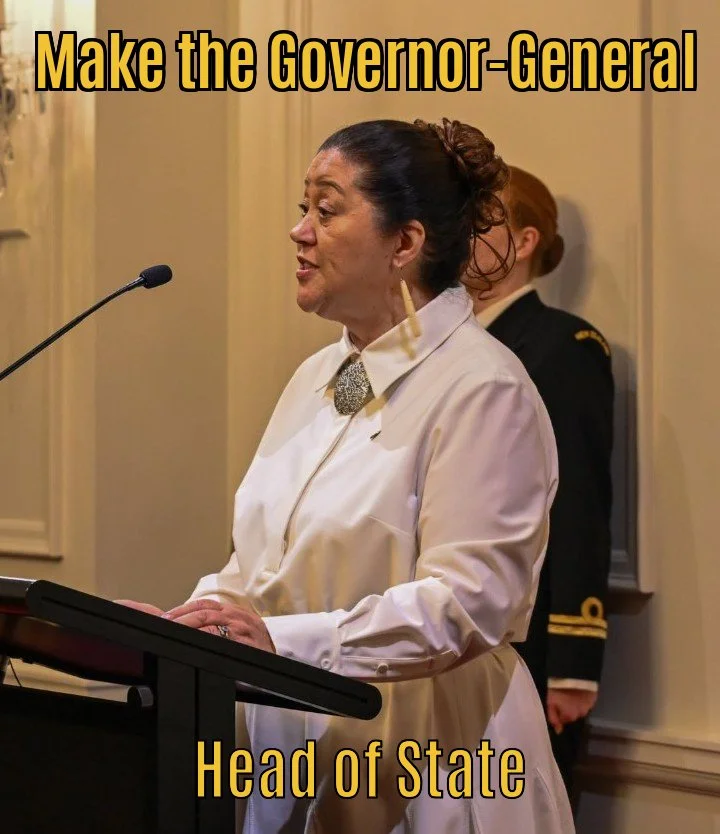
It is the Governor-General who does all the actual work of Head of State and the simplest solution to having an unelected, foreign head of state is to transition the role of Governor-General and make our highest constitutional office what it actually is: The Office of Head of State.

We are doing this today because September 6 is the anniversary of the passing of the British Nationality and NZ Citizenship Act 1948. The constitutional milestone that created New Zealand citizenship.

We assert very simply that only a New Zealander should be eligible to be New Zealand’s Head of State. The office holder should change every five years, and the role should retain the same constitutional, ceremonial and community duties as our Governor-General has now.

Since 1967 we have had New Zealand-born and New Zealand-appointed Governors-General so for 60 years we have been trialling what it means to have our own head of state. Like our Governors-General before them, our Head of State needs to always be someone of outstanding merit and mana. A person with proven dedication to the public good who can represent New Zealand and all New Zealanders with dignity.

Voting rights for citizens and permanent residents are an election issue. While only New Zealand citizens can stand for parliament, NZ First are asserting that voters with Permanent Residence should lose their voting rights after 51 years of having them.

Yet at the same time, our current Head of State, King Charles, is not a citizen, does not live here and never has. The King wields little to no power and the Monarch has for decades been consigned to the role of symbolic figurehead. As a British Sovereign, he is a poor symbol for New Zealand and does no work of any substance or value to New Zealanders.

The Governors-General do not report to the King. As de facto head of state they discharge all functions of New Zealand head of state and act on the advice of ministers from the elected government of the day. The palace does little more than rubber-stamp what is sent from the Governor-General, or from the Beehive via the Governor-General.

The Governor-General’s relationship to the King is tenuous. It is not clear how much regular contact there is between Government House and Buckingham Palace. By convention, the King stays out of New Zealand’s business and has expressed no opposition to us having our own head of state.

The Governor-General who holds ‘the royal prerogative’ and has legal powers to act independently of Government ministers to dissolve parliament, dismiss or appoint a Prime Minister.

The change we propose is not a radical constitutional shift because New Zealand is already one of the world’s most stable, democratic, parliamentary democracies. In every respect except one we are already a parliamentary republic. It is the lack of our own Head of State that is letting us down.

The changes we propose are about taking what we know is working and making it better.

To make it all happen we propose two steps. First, introduce transparency to the selection process for Governor-General. Adopt a system of indirect election via a super-majority in Parliament to select the office-holder instead of the Prime Minister.

Second, define the role’s powers and responsibilities in law as New Zealand Head of State then put to a referendum. Voters choose between staying with a Governor-General selected by parliament or becoming constitutional independent with a democratic Head of State.

It is a simple, elegant, and pragmatic proposal. If the vote is no, we stay with an indirectly elected Governor-General. If it is yes, the incumbent Governor-General becomes Head of State. There would be periodic assessments to check whether the office of our Head of State needed further adjustment or improvement.

Any proposal to change our constitutional laws or conventions deserves scrutiny so before they support change, New Zealanders rightfully want to know more about the reforms we are advocating. In principle, it is a simple solution but in practice voters are wary of potential pitfalls. There is hesitation to make the change or to make it a priority.

We are not advocating for wider change to the parliamentary electoral system, to the way Cabinet or Parliament operate. Having our own Head of State is not about changing the process of Treaty reconciliation or how our laws become laws.

We see no need to change other aspects of our constitution to achieve our own Head of State, and we do not believe in conflating constitutional issues. Safe and steady incremental constitutional change is a better way to do things. New Zealand is stable because we take practical steps to solve real-world problems. We do not grab for ideology and search for upheaval.

The Treaty of Waitangi is not dependent on retaining a British Head of State. It is a treaty between and for New Zealanders and having our own Head of State will help make that clear.

The concept of “the Crown” is not the simplest concept to explain and it is not surprising when people think it refers solely to the King. Few New Zealanders have read the Cabinet manual, which explains that in essence “the Crown” means the permanent authority of the state, enacted in the name of the Head of State, but embodied by the executive government, by ministers and their departments.

We are now focusing far more on the Head of State instead of talking about becoming a republic because the categories of republic are so broad they get in the way of talking specifics. Pointing at the US or at various false and failing republics as an argument against having our own Head of State is a distraction from how New Zealand works in practice.

Every republic is different and each country’s democracy reflects its unique circumstances.

Austria, Iceland and Ireland, are all parliamentary republics where the Head of State has limited constitutional and ceremonial powers, but we are not proposing to copy any other countries. We are proposing a New Zealand Head of State and a distinctly New Zealand-style parliamentary republic.

Despite what objectors say, our stability is not dependent on having a foreign or an aristocratic or an Anglican Head of State. It is because New Zealanders have a well-developed, long-held and widespread commitment to good governance.

From today onwards our website, campaign literature and all our lobbying, advertising and messaging will be about moving towards a NZ Head of State. Our focus is still on principles not personalities and our commitment to involving all New Zealanders in the debate continues. Our commitment to achieving what is fair and pragmatic and in the interests of all New Zealanders remains.

We are looking forward to Waitangi Day 2040 when New Zealand’s Head of State and Britain’s Head of State meet at the Treaty grounds as equals. Representatives of two sovereign countries bound together by our shared historical and our ongoing political, cultural and economic bonds.

Savage is a union director in Auckland and the current chair of NZ Republic / Kia Mana Motuhake a Aotearoa. He was one of the co-founders of the campaign and has been involved since its inception in 1994.

Matariki: How New Zealand made the day

Matariki is more than just a day or a long weekend. It is part of a new way of understanding what it means to be a New Zealander. Here at New Zealand Republic our members and supporters are proud of our long involvement in promoting and making Matariki part of New Zealand’s vibrant cultural life. Because celebrating New Zealand is at the heart of what we do.

Matariki recognises Te Ao Māori and New Zealand’s place in the world. A unique nation with its own history and its our own perspective on life. Since 2010 we were part of the many people and groups leading the call for Matariki celebrations and in 2019 and 2020 we were part of the political push to make it it an official holiday.

The Matariki revival started in the 1990s when the history and meaning of Matariki and Puanga was being discussed and written about as part of the wider revival of Te Ao Māori. In 1990, Aotearoa celebrated and commemorated the 150th anniversary of Te Tiriti. In 1995, Pipitea marae in Poneke hosted Te Whakanui i a Matariki festival. In 2000, Ngāti Kahungunu began holding its annual Matariki celebration in Hastings. In 2001, Te Puni Kōkiri began to reclaim Matariki as a focus for Te Reo revival in partnership with Te Papa Tongarewa and the Ministry of Education. Te Puni Kōkiri began calling for it to become a public holiday. By 2009 over 70 Matariki events were happening in Auckland alone.

Calling for change is one thing but making it happen takes concerted and deliberate effort. The iwi and councils and community groups and the many whanau and families holding Matariki events were part of making Matariki happen, but the formal proposal to make Matariki a public holiday was started with a private members bill from Te Pati Māori MP Rahui Katene which was drawn from the ballot in June 2009. Waitakere City Mayor Bob Harvey supported the call to make it a public holiday to replace Queen’s Birthday. In 2010 the film Matariki was released, and in 2010 we escalated our own campaign to replace Queen’s Birthday with Matariki by highlighting the fact that no local authorities were celebrating Queen’s Birthday but that more and more were celebrating Matariki.

To NZ Republic supporters it was simple. Queen - now King’s Birthday - is an empty holiday that commemorates nobody’s birthday and is held at the wrong time of year. Opponents of Matariki said it would cost too much money to have another public holiday. We could see that Matariki was what really mattered. That it was real and it was an honest reflection of how New Zealanders lived. That our cultural history as a nation is rich and meaningful.

After the 2011 election, the National Party and Te Pati Māori agreement supported a heritage bill to recognise Matariki/Puanga. The movement continued, the Matariki events spread. In July 2020, Action Station and NZ Republic delivered two combined petitions signed by 30,000 people calling for Matariki to be made a public holiday . In 2020 the incoming Labour government joined the commitment and in 2022 the first public holiday happened.

Recently an NZ Herald Editorial described us as “anti-monarchists” because we publicly pointed out that the royal soap opera that is King Charles and his family are of no benefit to New Zealand. That only a New Zealander should be New Zealand’s Head of State.

It is true that we are against a monarchist system of any kind for NZ but what their editorial failed to recognise was that our campaign is first and foremost about celebrating New Zealand and New Zealanders. That is what motivates us.

The pathway to recognising and achieving Matariki as a national day was made with specific political commitments to make it law. And that is what New Zealand needs now to achieve our own Head of State. Not just a commitment and talk but a specific and defined pathway to change. We have put that forward. First, parliament elects the Governor-General. Second a referendum is held to transition the role of Governor-General into being Head of State. You can read it online on our website

In 14 years we all reach the 200th anniversary of Te Tiriti. Our vision is simple. That in 2040 NZ’s Head of State and Britain’s Head of State meet at Waitangi as equals. And our call to end King’s Birthday remains. Now that Matariki has been achieved, we are calling for 6 September to become a new public holiday. A day to celebrate the establishment of New Zealand Citizenship 78 years ago. A day that celebrates what is real. When all New Zealanders can celebrate what it means to be here and be part of this unique and special nation.

Replacing King's Birthday

New Zealand should replace King's Birthday with a more meaningful celebration. It has lost what little cultural meaning it had and we need to fill the gap between Matariki and Labur weekend. The British King had nothing to do with deciding which of the 178 New Zealanders were honoured in the ‘King’s Birthday Honours’ and as a long weekend it is largely renowned for delivering a lot of rainy weather.

We are continuing our call for the holiday weekend it to be replaced with a long weekend in early September. 

Campaign Chair, Savage, commented today "King's Birthday has been surpassed by Matariki as a long weekend to mark the start of winter”.

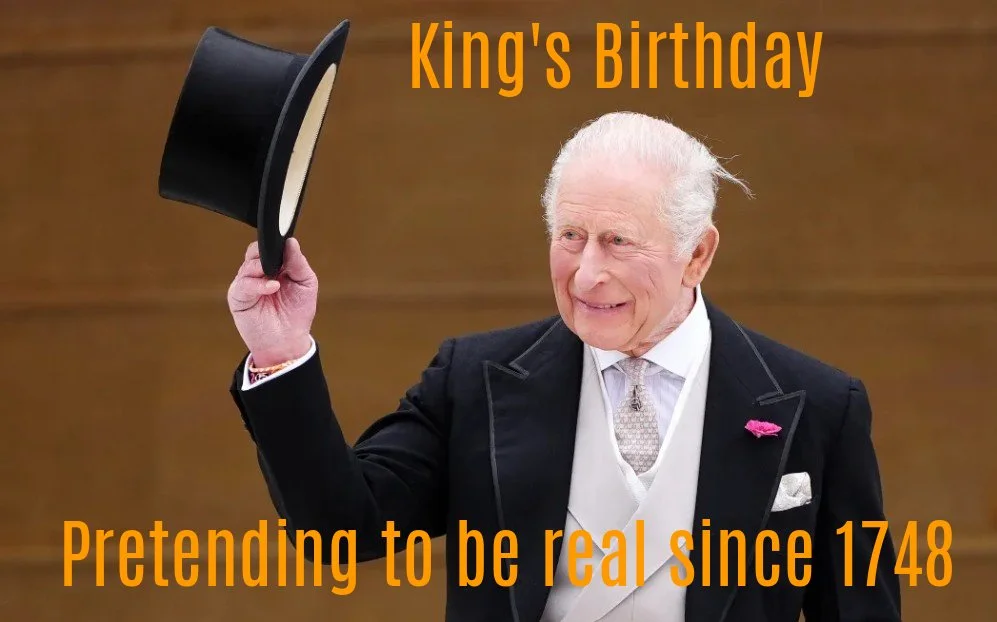
“We all know it is not the actual King's birthday and the only reason it is at the start of June is because it is the start of the British summer. In 1748, mad King George II decided his actual birthday on 14 December was too dark and rainy to being out the crowds so he moved it to coincide with the trooping of the colour ceremony”.

“Even the British don't recognise it as a holiday”.

"The many months between Matariki and Labour weekend is far too long. Last year the vast majority of New Zealanders went over four months through the winter without any public holiday. The only public holidays celebrated in the four months are both regional”.

“Hawkes Bay celebrate on the Friday before Labour Monday which is a pretty smart move. South Canterbury Day have the last Monday in September. A day to mark Dominion Day 26 September 1907 when New Zealand achieved partial independence from the old British Empire”.

"We’d be better off letting go of an empty celebration like King's Birthday and choosing a far more significant day in September. The two strongest contenders for a day that has real significance to Aotearoa are 6 September, the anniversary of New Zealand citizenship, when we Kiwis stopped being British subjects, and Suffrage Day on 19 September celebrating New Zealand women winning their campaign for voting rights”.  

“Few New Zealanders will mourn the loss of King's Birthday weekend but long weekends are an important part of staying connected to family and friends. So we can do what South Canterbury does and choose a Monday in September. With South Canterbury day on the last Monday in September the first Monday in September is a strong contender to replace the pretend birthday holiday we have on the first Monday in June”. 

“Citizenship Weekend would be a time to celebrate all New Zealanders no matter where they are from or where they were born.  Citizenship Day would be the perfect time to hold local citizenship ceremonies celebrating recent migrants achieving citizenship.  Instead of King’s Birthday honours we would propose Matariki honours. On both of our New Year’s days, leading New Zealanders would be honoured for their commitment to their fellow New Zealanders”.