We are changing the campaign

On the anniversary of New Zealand citizenship, we are rebranding our campaign from New Zealand Republic to New Zealand Head of State.

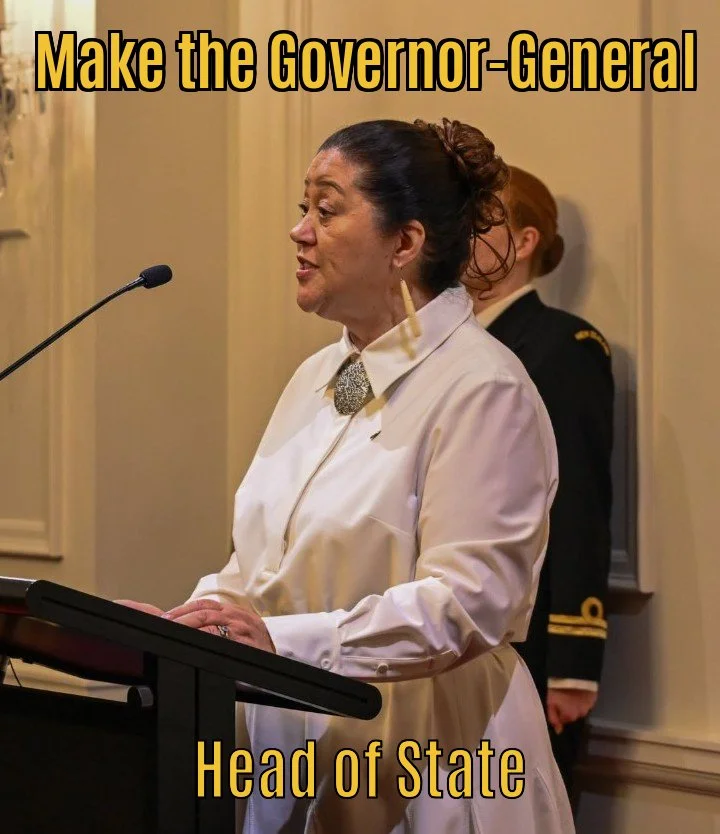
It is the Governor-General who does all the actual work of Head of State and the simplest solution to having an unelected, foreign head of state is to transition the role of Governor-General and make our highest constitutional office what it actually is: The Office of Head of State.

We are doing this today because September 6 is the anniversary of the passing of the British Nationality and NZ Citizenship Act 1948. The constitutional milestone that created New Zealand citizenship.

We assert very simply that only a New Zealander should be eligible to be New Zealand’s Head of State. The office holder should change every five years, and the role should retain the same constitutional, ceremonial and community duties as our Governor-General has now.

Since 1967 we have had New Zealand-born and New Zealand-appointed Governors-General so for 60 years we have been trialling what it means to have our own head of state. Like our Governors-General before them, our Head of State needs to always be someone of outstanding merit and mana. A person with proven dedication to the public good who can represent New Zealand and all New Zealanders with dignity.

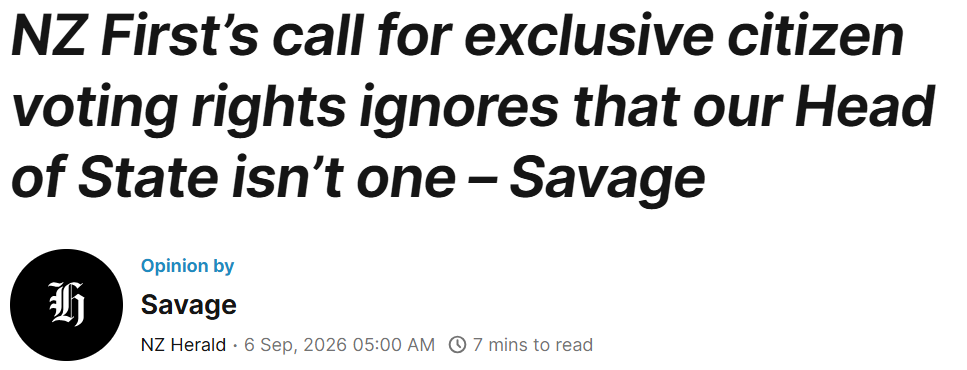
Voting rights for citizens and permanent residents are an election issue. While only New Zealand citizens can stand for parliament, NZ First are asserting that voters with Permanent Residence should lose their voting rights after 51 years of having them.

Yet at the same time, our current Head of State, King Charles, is not a citizen, does not live here and never has. The King wields little to no power and the Monarch has for decades been consigned to the role of symbolic figurehead. As a British Sovereign, he is a poor symbol for New Zealand and does no work of any substance or value to New Zealanders.

The Governors-General do not report to the King. As de facto head of state they discharge all functions of New Zealand head of state and act on the advice of ministers from the elected government of the day. The palace does little more than rubber-stamp what is sent from the Governor-General, or from the Beehive via the Governor-General.

The Governor-General’s relationship to the King is tenuous. It is not clear how much regular contact there is between Government House and Buckingham Palace. By convention, the King stays out of New Zealand’s business and has expressed no opposition to us having our own head of state.

The Governor-General who holds ‘the royal prerogative’ and has legal powers to act independently of Government ministers to dissolve parliament, dismiss or appoint a Prime Minister.

The change we propose is not a radical constitutional shift because New Zealand is already one of the world’s most stable, democratic, parliamentary democracies. In every respect except one we are already a parliamentary republic. It is the lack of our own Head of State that is letting us down.

The changes we propose are about taking what we know is working and making it better.

To make it all happen we propose two steps. First, introduce transparency to the selection process for Governor-General. Adopt a system of indirect election via a super-majority in Parliament to select the office-holder instead of the Prime Minister.

Second, define the role’s powers and responsibilities in law as New Zealand Head of State then put to a referendum. Voters choose between staying with a Governor-General selected by parliament or becoming constitutional independent with a democratic Head of State.

It is a simple, elegant, and pragmatic proposal. If the vote is no, we stay with an indirectly elected Governor-General. If it is yes, the incumbent Governor-General becomes Head of State. There would be periodic assessments to check whether the office of our Head of State needed further adjustment or improvement.

Any proposal to change our constitutional laws or conventions deserves scrutiny so before they support change, New Zealanders rightfully want to know more about the reforms we are advocating. In principle, it is a simple solution but in practice voters are wary of potential pitfalls. There is hesitation to make the change or to make it a priority.

We are not advocating for wider change to the parliamentary electoral system, to the way Cabinet or Parliament operate. Having our own Head of State is not about changing the process of Treaty reconciliation or how our laws become laws.

We see no need to change other aspects of our constitution to achieve our own Head of State, and we do not believe in conflating constitutional issues. Safe and steady incremental constitutional change is a better way to do things. New Zealand is stable because we take practical steps to solve real-world problems. We do not grab for ideology and search for upheaval.

The Treaty of Waitangi is not dependent on retaining a British Head of State. It is a treaty between and for New Zealanders and having our own Head of State will help make that clear.

The concept of “the Crown” is not the simplest concept to explain and it is not surprising when people think it refers solely to the King. Few New Zealanders have read the Cabinet manual, which explains that in essence “the Crown” means the permanent authority of the state, enacted in the name of the Head of State, but embodied by the executive government, by ministers and their departments.

We are now focusing far more on the Head of State instead of talking about becoming a republic because the categories of republic are so broad they get in the way of talking specifics. Pointing at the US or at various false and failing republics as an argument against having our own Head of State is a distraction from how New Zealand works in practice.

Every republic is different and each country’s democracy reflects its unique circumstances.

Austria, Iceland and Ireland, are all parliamentary republics where the Head of State has limited constitutional and ceremonial powers, but we are not proposing to copy any other countries. We are proposing a New Zealand Head of State and a distinctly New Zealand-style parliamentary republic.

Despite what objectors say, our stability is not dependent on having a foreign or an aristocratic or an Anglican Head of State. It is because New Zealanders have a well-developed, long-held and widespread commitment to good governance.

From today onwards our website, campaign literature and all our lobbying, advertising and messaging will be about moving towards a NZ Head of State. Our focus is still on principles not personalities and our commitment to involving all New Zealanders in the debate continues. Our commitment to achieving what is fair and pragmatic and in the interests of all New Zealanders remains.

We are looking forward to Waitangi Day 2040 when New Zealand’s Head of State and Britain’s Head of State meet at the Treaty grounds as equals. Representatives of two sovereign countries bound together by our shared historical and our ongoing political, cultural and economic bonds.

Savage is a union director in Auckland and the current chair of NZ Republic / Kia Mana Motuhake a Aotearoa. He was one of the co-founders of the campaign and has been involved since its inception in 1994.

Matariki: How New Zealand made the day

Matariki is more than just a day or a long weekend. It is part of a new way of understanding what it means to be a New Zealander. Here at New Zealand Republic our members and supporters are proud of our long involvement in promoting and making Matariki part of New Zealand’s vibrant cultural life. Because celebrating New Zealand is at the heart of what we do.

Matariki recognises Te Ao Māori and New Zealand’s place in the world. A unique nation with its own history and its our own perspective on life. Since 2010 we were part of the many people and groups leading the call for Matariki celebrations and in 2019 and 2020 we were part of the political push to make it it an official holiday.

The Matariki revival started in the 1990s when the history and meaning of Matariki and Puanga was being discussed and written about as part of the wider revival of Te Ao Māori. In 1990, Aotearoa celebrated and commemorated the 150th anniversary of Te Tiriti. In 1995, Pipitea marae in Poneke hosted Te Whakanui i a Matariki festival. In 2000, Ngāti Kahungunu began holding its annual Matariki celebration in Hastings. In 2001, Te Puni Kōkiri began to reclaim Matariki as a focus for Te Reo revival in partnership with Te Papa Tongarewa and the Ministry of Education. Te Puni Kōkiri began calling for it to become a public holiday. By 2009 over 70 Matariki events were happening in Auckland alone.

Calling for change is one thing but making it happen takes concerted and deliberate effort. The iwi and councils and community groups and the many whanau and families holding Matariki events were part of making Matariki happen, but the formal proposal to make Matariki a public holiday was started with a private members bill from Te Pati Māori MP Rahui Katene which was drawn from the ballot in June 2009. Waitakere City Mayor Bob Harvey supported the call to make it a public holiday to replace Queen’s Birthday. In 2010 the film Matariki was released, and in 2010 we escalated our own campaign to replace Queen’s Birthday with Matariki by highlighting the fact that no local authorities were celebrating Queen’s Birthday but that more and more were celebrating Matariki.

To NZ Republic supporters it was simple. Queen - now King’s Birthday - is an empty holiday that commemorates nobody’s birthday and is held at the wrong time of year. Opponents of Matariki said it would cost too much money to have another public holiday. We could see that Matariki was what really mattered. That it was real and it was an honest reflection of how New Zealanders lived. That our cultural history as a nation is rich and meaningful.

After the 2011 election, the National Party and Te Pati Māori agreement supported a heritage bill to recognise Matariki/Puanga. The movement continued, the Matariki events spread. In July 2020, Action Station and NZ Republic delivered two combined petitions signed by 30,000 people calling for Matariki to be made a public holiday . In 2020 the incoming Labour government joined the commitment and in 2022 the first public holiday happened.

Recently an NZ Herald Editorial described us as “anti-monarchists” because we publicly pointed out that the royal soap opera that is King Charles and his family are of no benefit to New Zealand. That only a New Zealander should be New Zealand’s Head of State.

It is true that we are against a monarchist system of any kind for NZ but what their editorial failed to recognise was that our campaign is first and foremost about celebrating New Zealand and New Zealanders. That is what motivates us.

The pathway to recognising and achieving Matariki as a national day was made with specific political commitments to make it law. And that is what New Zealand needs now to achieve our own Head of State. Not just a commitment and talk but a specific and defined pathway to change. We have put that forward. First, parliament elects the Governor-General. Second a referendum is held to transition the role of Governor-General into being Head of State. You can read it online on our website

In 14 years we all reach the 200th anniversary of Te Tiriti. Our vision is simple. That in 2040 NZ’s Head of State and Britain’s Head of State meet at Waitangi as equals. And our call to end King’s Birthday remains. Now that Matariki has been achieved, we are calling for 6 September to become a new public holiday. A day to celebrate the establishment of New Zealand Citizenship 78 years ago. A day that celebrates what is real. When all New Zealanders can celebrate what it means to be here and be part of this unique and special nation.

Replacing King's Birthday

New Zealand should replace King's Birthday with a more meaningful celebration. It has lost what little cultural meaning it had and we need to fill the gap between Matariki and Labur weekend. The British King had nothing to do with deciding which of the 178 New Zealanders were honoured in the ‘King’s Birthday Honours’ and as a long weekend it is largely renowned for delivering a lot of rainy weather.

We are continuing our call for the holiday weekend it to be replaced with a long weekend in early September. 

Campaign Chair, Savage, commented today "King's Birthday has been surpassed by Matariki as a long weekend to mark the start of winter”.

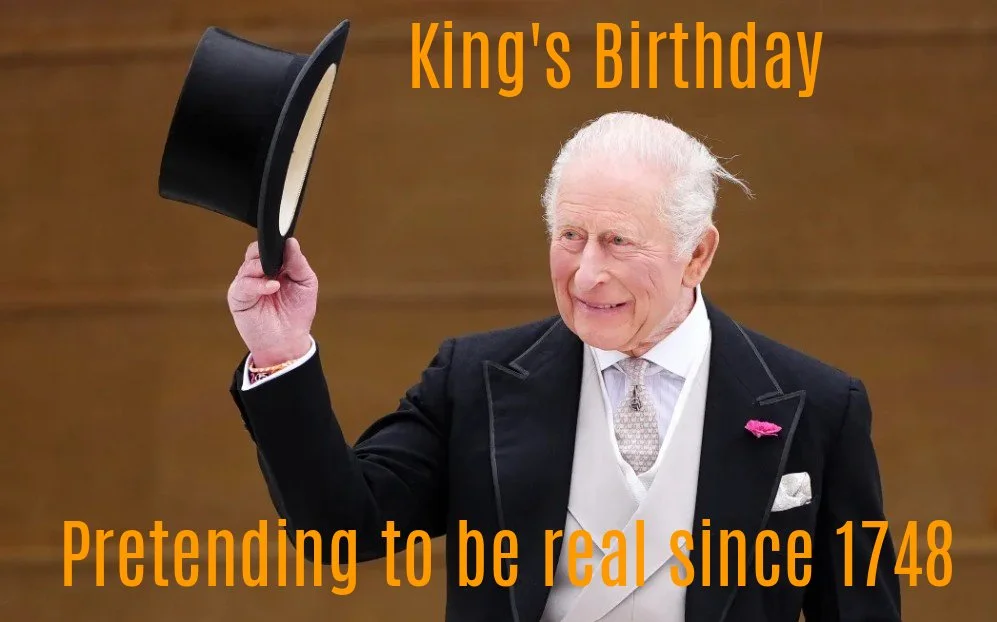
“We all know it is not the actual King's birthday and the only reason it is at the start of June is because it is the start of the British summer. In 1748, mad King George II decided his actual birthday on 14 December was too dark and rainy to being out the crowds so he moved it to coincide with the trooping of the colour ceremony”.

“Even the British don't recognise it as a holiday”.

"The many months between Matariki and Labour weekend is far too long. Last year the vast majority of New Zealanders went over four months through the winter without any public holiday. The only public holidays celebrated in the four months are both regional”.

“Hawkes Bay celebrate on the Friday before Labour Monday which is a pretty smart move. South Canterbury Day have the last Monday in September. A day to mark Dominion Day 26 September 1907 when New Zealand achieved partial independence from the old British Empire”.

"We’d be better off letting go of an empty celebration like King's Birthday and choosing a far more significant day in September. The two strongest contenders for a day that has real significance to Aotearoa are 6 September, the anniversary of New Zealand citizenship, when we Kiwis stopped being British subjects, and Suffrage Day on 19 September celebrating New Zealand women winning their campaign for voting rights”.  

“Few New Zealanders will mourn the loss of King's Birthday weekend but long weekends are an important part of staying connected to family and friends. So we can do what South Canterbury does and choose a Monday in September. With South Canterbury day on the last Monday in September the first Monday in September is a strong contender to replace the pretend birthday holiday we have on the first Monday in June”. 

“Citizenship Weekend would be a time to celebrate all New Zealanders no matter where they are from or where they were born.  Citizenship Day would be the perfect time to hold local citizenship ceremonies celebrating recent migrants achieving citizenship.  Instead of King’s Birthday honours we would propose Matariki honours. On both of our New Year’s days, leading New Zealanders would be honoured for their commitment to their fellow New Zealanders”.

Our Head of State and their Head of State.

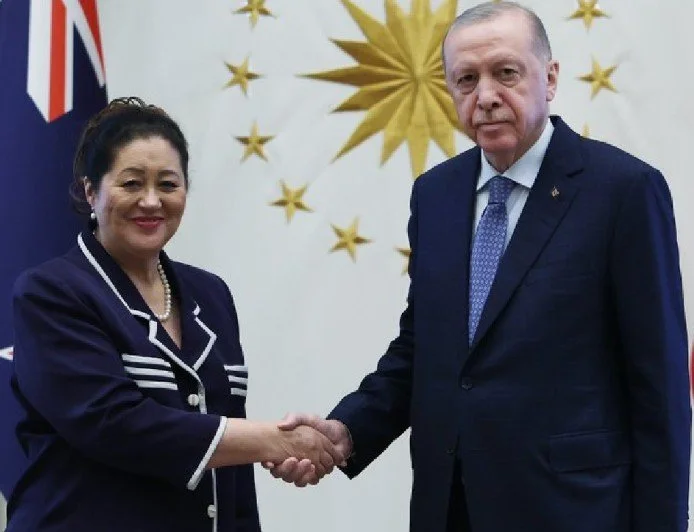
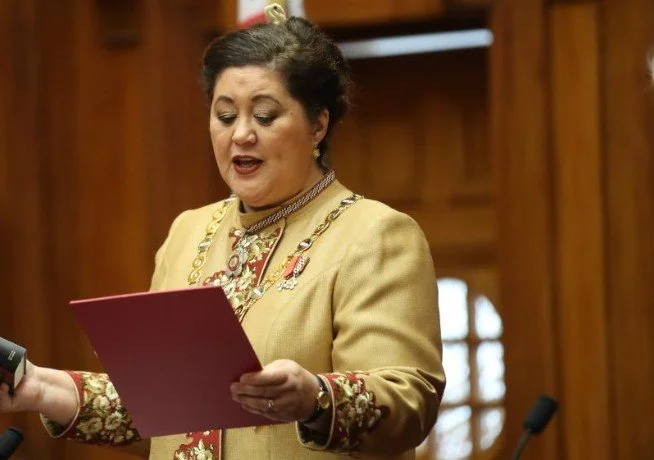
In Aotearoa, we call it 111 years since Gallipoli. In Türkiye they call it the 111th anniversary of the Çanakkale Land Battles. When our Governor-General travels to countries like Türkiye on diplomatic visits she is doing all the important work of being NZ’s Head of State. Extending the diplomatic hand of friendship and co-operation with an important European partner. Bridging the gap between two proud nations.

Meanwhile in Washington DC, two other Heads of State meet. King Charles who is never once referred to as anything other than Britain’s Head of State meets with President Donald Trump. That visit is of course all about just two countries. Charles will address the US Congress as part of a visit to mark the 250th anniversary of American independence from the UK. Charles announces that “time and again our two countries have always found ways to come together”. It is clear that despite being our Head of State he is not talking about NZ (or Canada or Australia or any other of his ‘realms’).

The King’s speech will have been written for him by the UK government. He may be our Head of State on paper but when he visits other countries he is never visiting as our Head of State. Its a diplomatic sham that continues to go on because we haven’t got around to fixing it.

In the USA Trump and Charles exchange platitudes and hyperbole and make grand statements about their respective nations in an effort to patch up the obviously strained relationship. Meanwhile, our Governor-General will go about the business of representing New Zealand with the honesty and dignity we expect of our highest constitutional office.

The Arrest of Andrew Mountbatten-Windsor

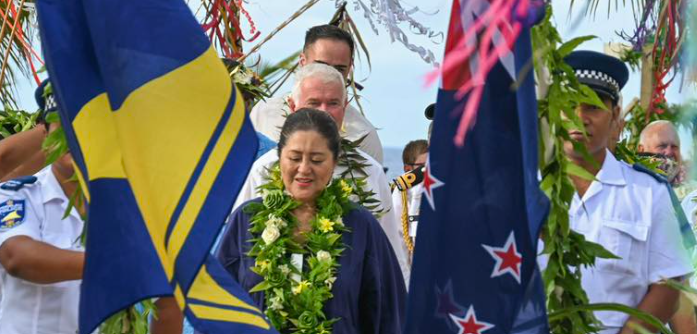
New Zealand needs an office of Head of State that is authentic, effective and accountable. Not one tainted by corruption and scandal. Our Governor-General pays a dignified visit to the New Zealand citizens of Tokelau while Andrew Mountbatten-Windsor is arrested on suspicion of corruption. His brother Charles and nephew William are under scrutiny for their role in appointing him to a trade envoy position that allowed him access to so much sensitive information. Both of them knowing he was close friends with two convicted sex offenders.

The Office of Governor General is already fulfilling the role of Head of State but it is in need of several improvements. We need to democratise the method of selection, clarify the reserve powers, and ensure proper transparency and public accountability. Our constitutional processes are still being tainted by our association with the British monarchy. Removing Andrew from the line of succession is a process that 15 other countries will have to agree to. We have an ineffectual and out-dated approach to appointing our most important diplomatic and constitutional role. So we need to finalise the cultural and constitutional transition from realm to republic.

The answer to the monarchy problem is very simple. Transition our Governor-General to being our actual Head of State by 2040. Celebrate the 200th anniversary of Te Tiriti having made that change. So that Britain’s Head of State and New Zealand’s Head of State can meet as equals. Two sovereign and distinct nations.

Vision 2040: NZ's Head of State and UK's Head of State meet as equals by Waitangi Day 2040

Vision 2040:  New Zealand's Head of State and Britain's Head of State meet as equals by Waitangi Day 2040

On the eve of Waitangi Day, campaign group New Zealand Republic is calling for New Zealand to transition the role of Governor-General to being our actual Head of State.

"We have a clear vision for 2040. New Zealand's Head of State and Britain's Head of State meet as equals on Waitangi Day 2040" said campaign spokesperson Savage. "It will be a day to celebrate. Each nation’s sovereign Head of State meeting together for the first time as equals at the treaty grounds".

"As we celebrate and discuss the importance of the Treaty we need to be honest about our constitutional future. Toitu Te Tiriti - the treaty is important but so is having a proper Head of State".

"We can't keep pretending that the British Head of State is our head of state. Successive Governors-General have brought sustained mana and dignity to the office. We just need to make that final transition. To clearly define its constitutional importance, to confirm what the reserve powers should be and decide how the office holder should be selected".

“But we should not wait for fourteen years. We need to be ready before 2040. Our constitutional progress has been measured by how independent and democratic we have become since 1840. But until we make the final step and have our own Head of State we cannot in all honesty call ourselves a sovereign nation.”

"This year voters need to decide who will choose our next Governor-General. At present the Prime Minister gets to do it. What we really need is to let all of parliament decide. From there it would be a straight-forward process to shift from parliamentary selection of the Governor-General to parliamentary selection of our very own Head of State".